

Every week, I review PVC ceiling supplier quotes from distributors who feel confused by wildly different prices for what looks like the same product — and most of the time, the quotes are not comparing the same thing at all.
A reasonable PVC ceiling supplier quote should clearly break down panel specifications, material grade, accessories, freight, waste allowance, and compliance documentation. Compare each line item across at least three quotes using identical assumptions before deciding. The cheapest number is rarely the best value.
In this guide, I will walk you through exactly how to audit a supplier quote line by line, spot hidden costs, and ask the right questions so you never overpay — or get burned by a price that looked too good to be true.
How can I determine if the PVC percentage in my quote justifies the price?
One lesson we learned early at our Zhejiang production base is that the raw PVC content in a panel changes everything — from how it feels in your hand to how it performs five years after installation material data sheet 1.
The PVC percentage directly affects panel rigidity, color stability, and lifespan. Panels made from 100% virgin PVC cost more but resist brittleness, yellowing, and cracking far better than panels blended with heavy recycled content or excessive calcium carbonate filler.
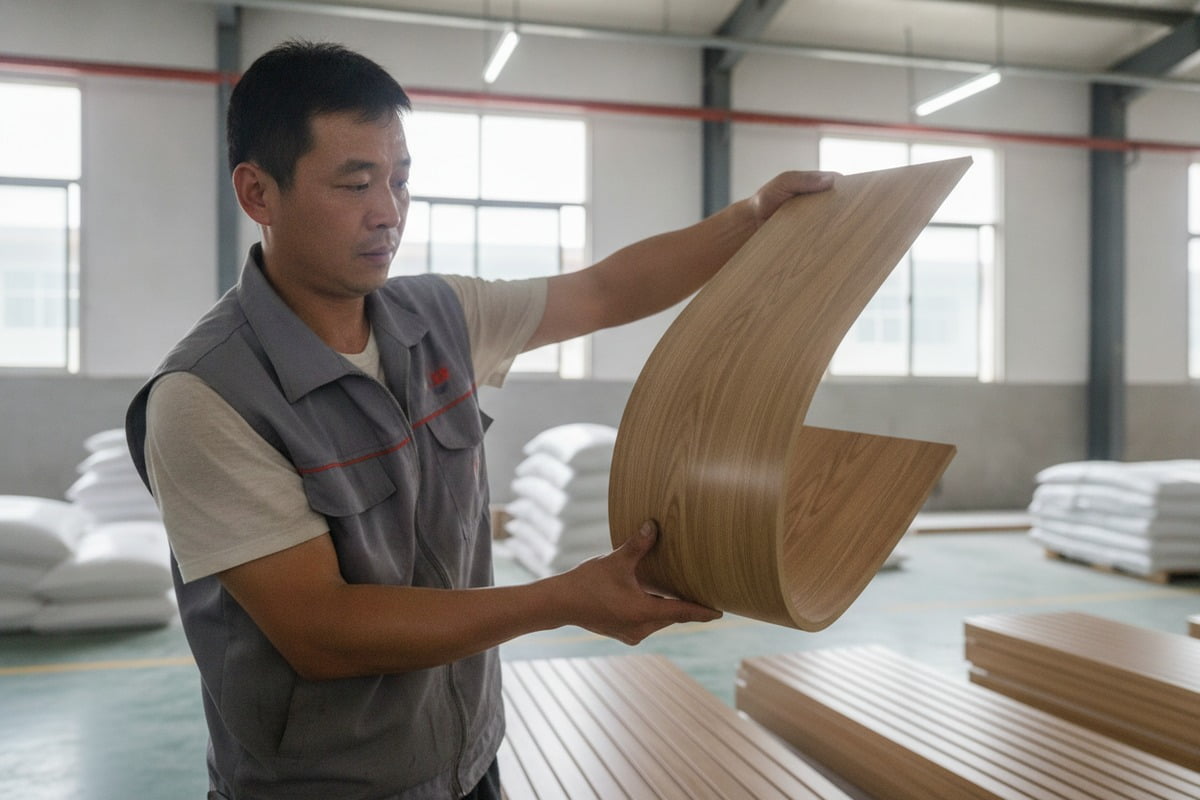
Why PVC Content Matters More Than You Think
When a supplier sends you a quote, the unit price per square meter means little without knowing what is inside the panel Material Safety Data Sheet (MSDS) 2. I have seen quotes where two suppliers offer "8 mm PVC ceiling panels" at prices 40% apart. The difference? One uses over 80% virgin PVC resin 3 while the other loads the formula with calcium carbonate filler to cut costs. The filler-heavy panel feels lighter, snaps more easily, and starts yellowing within a year in a humid climate.
Here is a simple framework I share with our distributors in Latin America and Southeast Asia:
Quick PVC Content vs. Price Guide
| PVC Resin Content | Typical Characteristics | Relative Price Level | Best For |
|---|---|---|---|
| 80–100% virgin PVC | Solid feel, excellent color stability, strong impact resistance | Higher | Commercial projects, long-term residential |
| 60–80% virgin PVC | Decent rigidity, moderate color retention | Mid-range | Standard residential, budget commercial |
| Below 60% virgin PVC | Lightweight, brittle over time, prone to yellowing | Lower | Temporary structures, very short-term use |
How to Verify PVC Content in a Quote
You cannot see PVC percentage by looking at a photo. Here is what I recommend:
- Request a material data sheet. Any serious supplier will provide one. If they refuse, that is a red flag.
- Ask for a sample. Bend it gently. A high-PVC panel flexes without snapping. A filler-heavy panel cracks or feels chalky.
- Check the weight. For an 8 mm panel, a heavier panel per square meter generally signals more PVC resin and less filler.
- Look at the surface finish. Consistent color, smooth lamination, and sharp design printing all point to better material quality.
When I walk our production floor, one test we do is a simple flex test on random panels from each batch. If the panel cracks instead of bending, the batch fails. That kind of quality control is what separates a trustworthy quote from a cheap number on paper.
Reference Your Local Retail Price
A practical tip: check what similar PVC ceiling panels sell for at retail in your local market. If your supplier quote plus shipping plus duties already exceeds or matches the local retail price, the deal makes no sense for a wholesale buyer. Your landed cost should leave room for your margin. This simple benchmark catches many bad quotes before you even start a detailed audit.
Panel thickness also interacts with PVC content. A thick panel with low PVC content can still be fragile. So always evaluate thickness and material grade together — never in isolation.
A distributor in Colombia once told me his "cheapest quote" ended up being his most expensive order — because the price on paper excluded palletization, fumigation, port handling, and even the cost of corner protectors inside the container.
Hidden fees in PVC ceiling quotes often include inland freight to port, palletization, fumigation certificates, container loading charges, export documentation, insurance, and packaging upgrades. Always request a fully landed cost breakdown before comparing supplier estimates.
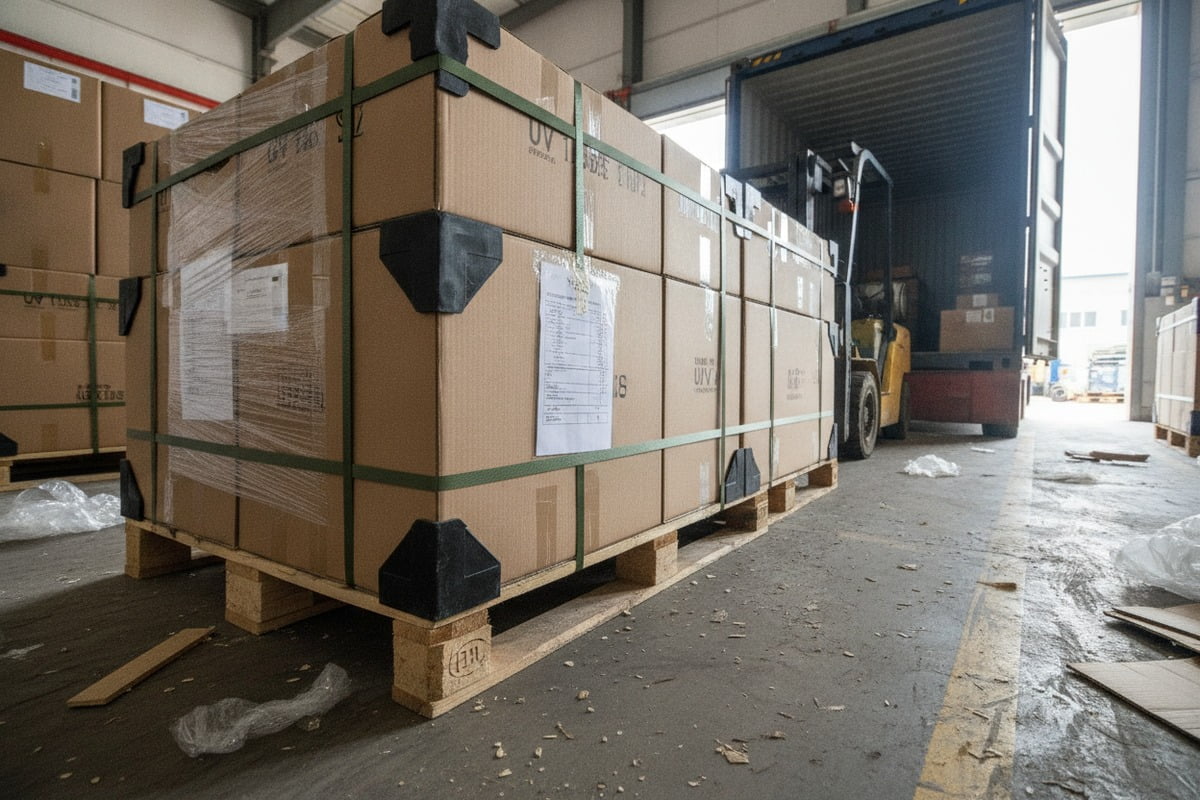
The Gap Between FOB Price and Landed Cost
Most supplier quotes start as FOB (Free on Board) 5 or EXW (Ex-Works) prices. That number covers the panels leaving the factory gate or the port. It does not cover what happens next. For buyers ordering full container loads — the standard for our customers — the logistics chain between the factory and your warehouse has many cost points.
Common Hidden Fees Checklist
| Fee Category | Often Included in Quote? | Typical Range (per container) | Notes |
|---|---|---|---|
| Inland freight (factory to port) | Sometimes | $150–$500 | Depends on factory-to-port distance |
| Palletization / stacking | Rarely | $100–$300 | Protects panels during ocean transit |
| Fumigation certificate | Rarely | $50–$150 | Required by many importing countries |
| Container loading labor | Sometimes | $80–$200 | Manual loading for non-palletized goods |
| Export customs documentation | Usually | $50–$120 | Bill of lading, commercial invoice, packing list |
| Marine insurance | Rarely | 0.2–0.5% of cargo value | Highly recommended for FCL shipments |
| Destination port charges | Never | Varies by port | Buyer's responsibility but affects total cost |
| Corner protectors / foam wrapping | Sometimes | $50–$150 | Critical for preventing edge damage |
How to Protect Yourself
I always encourage buyers to request a quote in two formats: the raw unit price (EXW or FOB) and the estimated CIF (Cost, Insurance, Freight) 6 price to their destination port. This forces the supplier to think through the full delivery chain. If the supplier cannot provide a CIF estimate, they may not have experience with international logistics — which introduces risk around delivery time and cargo safety.
Packaging quality is another silent cost driver. PVC panels with decorative finishes — like the wood-grain or metallic-gold designs we produce — are especially vulnerable to surface scratching during transit. Shrink-wrapping each panel, using PE film between layers, and adding cardboard corner guards all cost money. If the quote says nothing about packaging, ask. Damaged goods on arrival can wipe out any savings from a "low" price.
The waterproof properties of PVC panels are a selling point, but water resistance does not protect against physical damage from poor packaging. I have seen containers arrive with panels perfectly dry but heavily scratched because no one invested in proper interior padding.
Finally, confirm whether your quote includes product certifications and documentation. Certificates of origin, fire-retardant test report 7s, and phytosanitary documents all have processing costs. Some suppliers absorb these; others charge separately. Know where they sit in your quote.
How do I verify if my quote reflects competitive factory-direct pricing for high-volume FCL orders?
Last quarter, a new buyer from Ecuador sent us three competing quotes and asked us to explain why the prices were so different. When we broke each one down, two of the three were not even quoting the same panel thickness or the same accessory package.
To verify factory-direct pricing for FCL orders, compare quotes using identical panel specifications, confirm the supplier is a manufacturer or authorized OEM partner, request a cost model breakdown, and benchmark against at least two other verified suppliers quoting the same grade and volume.
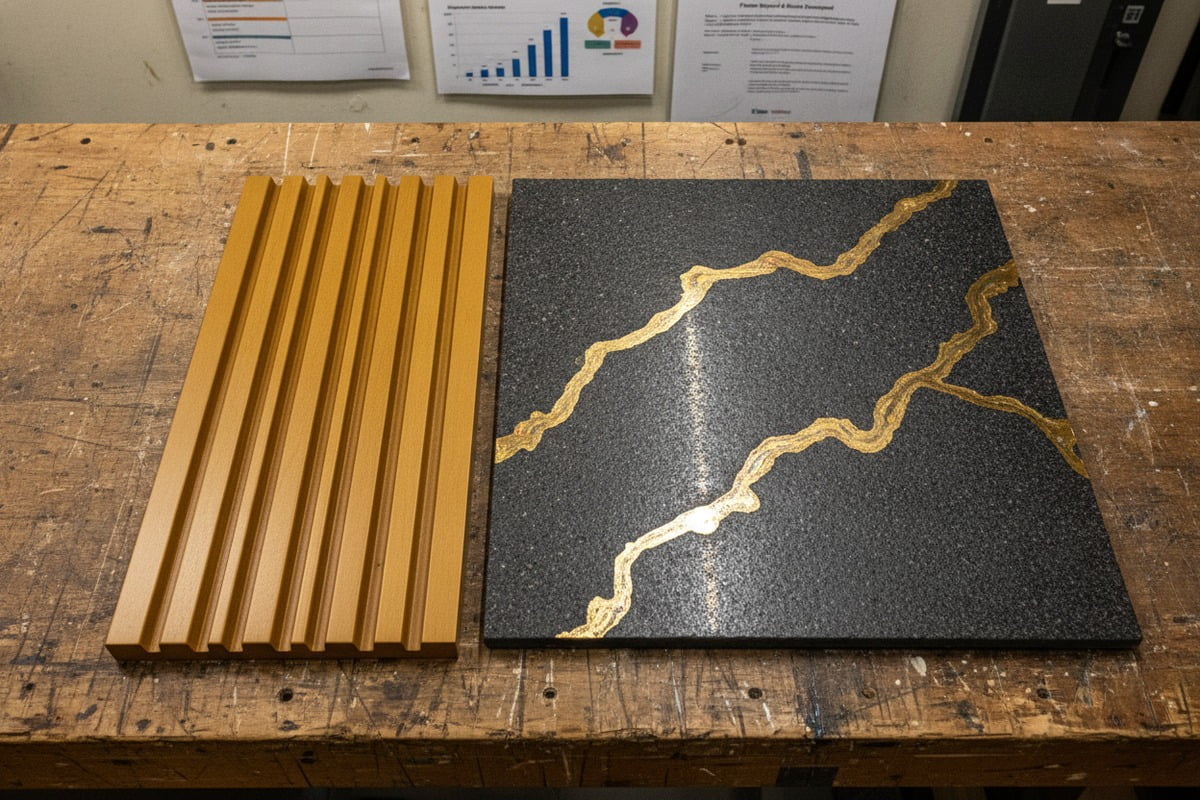
Step-by-Step Verification Process
Competitive pricing means the price is fair relative to the specification, volume, and service level. It does not mean the cheapest number on the table. Here is the process I walk buyers through:
1. Standardize the Comparison
Before you compare any two quotes, make sure they quote the same thing:
- Same panel dimensions (length × width × panel thickness)
- Same surface finish and design
- Same PVC resin grade
- Same accessory list (trims, joining bars, fasteners)
- Same packaging standard
- Same trade term (FOB, CIF, etc.)
If even one variable differs, the price comparison is meaningless.
2. Request a Cost Model
At our Zhejiang base, we use transparent cost modeling during negotiations with large-volume buyers. This means we show the rough breakdown: raw material cost per square meter, production cost, packaging, and margin. Not every supplier will do this, but those who do are signaling confidence in their pricing. If a supplier refuses to explain how their price is structured, ask yourself why.
3. Benchmark with a Quantity Calculator
Use a simple formula to estimate your panel quantity and cross-check the supplier's quoted volume:
Panels needed = (Ceiling area in m² ÷ Single panel area in m²) × (1 + Waste percentage)
For most standard ceiling installations, a waste allowance of 5–10% is normal. If the supplier quotes 15–20% waste, ask for justification. Overestimating waste inflates the order size and the total cost.
4. Compare Value, Not Just Price
| Evaluation Criteria | Low-Price Supplier | Mid-Price Supplier | Premium Supplier |
|---|---|---|---|
| Panel thickness | 5–6 mm | 7–8 mm | 8–10 mm |
| PVC content | Below 60% | 70–80% | 80–100% virgin |
| Surface finish options | Limited | Moderate | Wide range including custom panel design options |
| Warranty coverage | None or vague | 1–3 years | 5+ years |
| Fire rating documentation | Not provided | Available on request | Included by default |
| Delivery time reliability | Inconsistent | Generally on schedule | Contractually guaranteed |
| VOC emissions data | Not available | Available | Third-party tested |
This table is the kind of side-by-side framework I recommend to every distributor who buys in container volumes. The "cheapest" supplier in the left column may actually cost you more in returns, customer complaints, and lost reputation.
5. Verify the Supplier's Identity
Factory-direct pricing should come from a factory or an authorized OEM trading partner with direct production access. Check for:
- Factory audit reports or video tours
- Business registration matching the factory location
- Consistent product certifications across orders
- References from other importers in your region
If the supplier is a middleman adding a margin on top of another middleman, you are not getting factory-direct pricing — no matter what the quote says.
Does my quote include the professional fire-retardant testing and quality documentation I need for my local projects?
During a project review for a hotel chain buyer in Southeast Asia, we discovered that the previous supplier had provided panels with zero fire-retardant documentation. The buyer nearly failed a local building inspection, and the cost of ripping out and replacing the ceiling would have been ten times the original material cost.
Your quote should explicitly list fire-retardant test reports, product certifications like CE or SGS, material safety data sheets, and warranty terms. If these documents are missing from the quote, request them before signing — compliance failures on-site are far more expensive than the panels themselves.
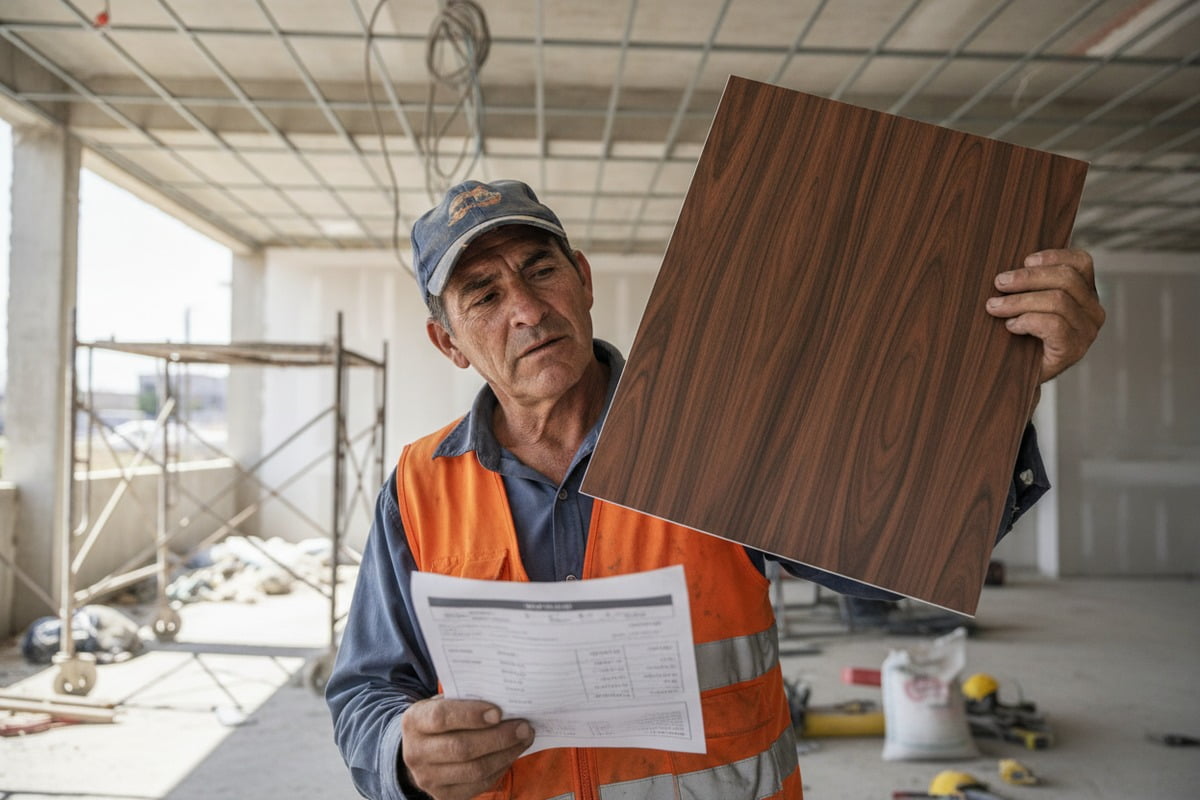
Why Documentation Is Not Optional
In commercial and public-space projects, local building codes almost always require proof of fire rating for ceiling materials. PVC panels can be engineered to meet various flammability standards, but the key word is "engineered." Not all PVC panels are fire-retardant by default. The fire-retardant additive package in the formulation is a real cost. If a supplier's price seems low and they do not mention fire testing, there is a good chance the panels lack the additive — and the certification.
What Documents to Expect in a Professional Quote
Here is what we include as standard when quoting for project-grade orders:
- Fire-retardant test report — conducted by an accredited third-party lab, showing the panel's flame spread and smoke development ratings
- CE or equivalent certification — depending on the destination market
- SGS or similar inspection report — verifying material composition, panel thickness, and physical properties
- Material Safety Data Sheet (MSDS) — covering VOC emissions, chemical composition, and safe handling
- Warranty documentation — specifying what is covered, for how long, and under what conditions
The Cost of Skipping Compliance
I have seen buyers save $0.30 per square meter by choosing a supplier who skips fire-retardant additives and documentation. On a 20-foot container of ceiling panels, that saves roughly $800–$1,200. But one failed building inspection can cost $5,000–$50,000 in removal, replacement, project delays, and fines. The math is clear.
Installation costs also increase when panels fail inspection. Workers must remove the non-compliant ceiling, dispose of the material, and reinstall with approved panels — doubling labor and time on site.
Acoustic and Environmental Considerations
If your project has specific acoustic requirements, ask the supplier for Noise Reduction Coefficient (NRC) 8 data. Standard PVC ceiling panels offer limited sound insulation, but some premium products include foam backing or micro-perforations that improve acoustic performance.
On the environmental side, low VOC emissions 9 are increasingly required in hospitals, schools, and green-certified buildings. Ask for third-party test data — not just a marketing claim on the product page. Waterproof properties, mold resistance, and termite resistance are also features that should be documented, not just stated verbally.
Warranty coverage is the final piece. A quote without a warranty clause is incomplete. At minimum, the warranty should cover delamination, color fading, and structural integrity for a defined period. If the supplier offers no warranty, the low price carries hidden risk that you will absorb later. Buyers sourcing for South American standards and certifications should pay especially close attention to region-specific compliance documents, as requirements vary significantly by country.
Conclusion
Evaluating a PVC ceiling supplier quote takes more than glancing at the bottom-line number — break it apart, verify every line item, and always demand the documentation that protects your projects and your reputation.
Footnotes
1. Defines a material safety data sheet as a fact sheet describing chemical properties and hazards. ↩︎
2. Explains MSDS (now SDS) as a document communicating chemical hazards, handling, and emergency response. ↩︎
3. Explains purity, consistent quality, and enhanced physical properties of virgin resin. ↩︎
4. Details how calcium carbonate is used as a filler in plastics to improve properties and reduce costs. ↩︎
5. Explains FOB Incoterms, defining seller and buyer responsibilities for costs and risk transfer. ↩︎
6. Defines CIF Incoterms, outlining seller’s responsibility for cost, insurance, and freight to destination. ↩︎
7. Explains ASTM E84, a standard test method for surface burning characteristics of building materials. ↩︎
8. Defines NRC as a single-number rating for a material’s average sound absorption performance. ↩︎
9. Discusses low VOC emissions requirements for building materials in green and sustainable buildings. ↩︎


0 Comments