

When our team first started shipping PVC ceilings to Ecuador and Colombia, one question kept coming up from every distributor we worked with — which certifications actually matter at the border?
South American standards and certifications for PVC ceilings are not governed by a single regional rule. Each country — Brazil, Colombia, Ecuador, Argentina, Chile — enforces its own fire safety, product labeling, quality management, and building code requirements. Importers must verify destination-specific compliance before shipping from China.
This guide breaks down the exact certifications, test reports, and compliance steps you need Fire safety classification 1. I will walk you through country-level rules, common supplier mistakes, and practical ways to verify documents before your container leaves the port.
What are the essential quality certifications I need for importing PVC ceilings into South America?
A lesson I learned early in our export operations to Latin America: a buyer in Bolivia once assumed our ISO 9001 certificate 2 would clear his shipment through customs. It did not. That experience reshaped how we prepare documentation for every South American order.
The essential certifications include country-specific product conformity assessments, fire classification reports, ISO 9001 for supplier credibility, and local language labeling compliance. Brazil requires INMETRO certification, Argentina references IRAM standards, and Andean Community regulations may apply in Colombia, Ecuador, Peru, and Bolivia.
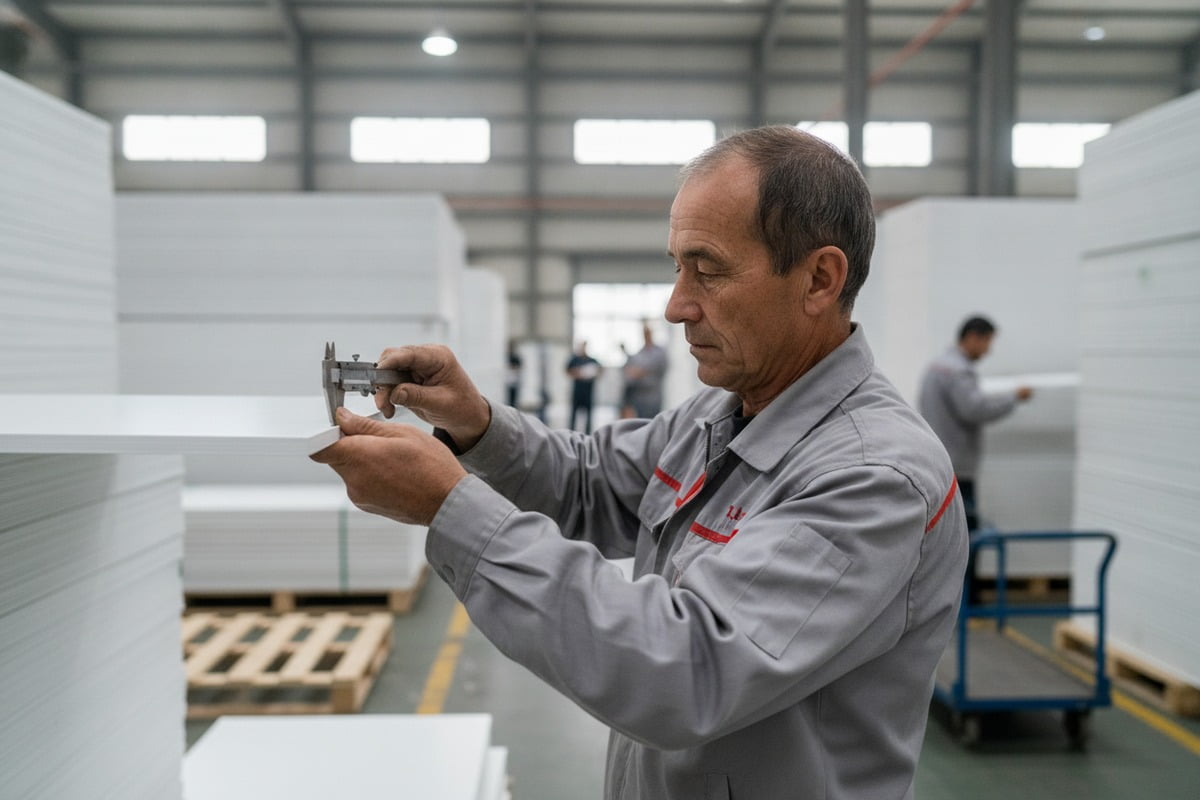
Why There Is No Single South American Certificate
South America is not a unified regulatory market for building materials. Unlike the CE marking system 3 in Europe, there is no one stamp that opens every border. Each country manages its own product conformity assessment process. This means a certificate valid in Brazil may have zero legal weight in Chile.
For PVC ceilings specifically, the compliance categories that matter most are:
- Fire safety classification — the single biggest compliance risk
- Product quality and dimensional standards — thickness, density, finish
- Indoor air quality and VOC emissions — increasingly relevant for schools, hospitals, and offices
- Labeling and language requirements — Spanish or Portuguese, depending on the market
- Customs and import documentation — commercial invoice, certificate of origin, packing list, bill of lading
Country-Level Certification Overview
| Country | Primary Standards Body | Key Certification / Requirement | Language |
|---|---|---|---|
| Brazil | INMETRO | INMETRO certification 4 for construction materials; fire behavior per ABNT standards | Portuguese |
| Argentina | IRAM | IRAM standards 5 for building products; fire resistance classification | Spanish |
| Colombia | ICONTEC / DIAN | NTC technical standards; RUT registration; product conformity | Spanish |
| Ecuador | INEN / SENAE | INEN standards; RUC registration; prior import authorization | Spanish |
| Peru | INDECOPI | National technical regulations; fire safety for interior finishes | Spanish |
| Chile | INN | NCh standards; building code fire requirements | Spanish |
| Bolivia | IBNORCA | Andean Community regulations 6 may apply; national technical norms | Spanish |
ISO 9001 Is Not Enough
Many Chinese suppliers — including factories we coordinate with at our Zhejiang production base — proudly display ISO 9001 certificates. This is a quality management system certificate. It tells the buyer that the factory follows organized production procedures. But it does not prove the product itself meets any South American building code.
I always tell our distributors: ISO 9001 is a screening tool, not a border-crossing document. You need it for credibility. You cannot use it to replace a fire test report or a local product conformity assessment.
Mercosur and Regional Harmonization
Mercosur member states — Brazil, Argentina, Uruguay, and Paraguay — have some trade harmonization. But for ceiling products and interior finishes, enforcement still happens at the national level. Even within Mercosur, import duties for South America vary, and each customs authority checks against its own technical regulations. Do not assume that clearing customs in Argentina means the same paperwork works in Brazil.
How can I ensure my Chinese PVC panels meet local fire-retardant and safety standards?
One trade-off we constantly weigh at our production facility is cost versus fire-retardant grade. A standard PVC ceiling panel is cheaper to produce. But a fire retardant PVC panel with proper documentation opens commercial and institutional project doors that standard panels cannot.
To ensure your Chinese PVC panels meet local fire-retardant standards, request third-party fire test reports that match the destination country's classification system. Ask for reaction-to-fire testing, flame spread index data, and smoke density results. Then confirm the fire class is accepted for the specific building type — residential, commercial, healthcare, or escape route.
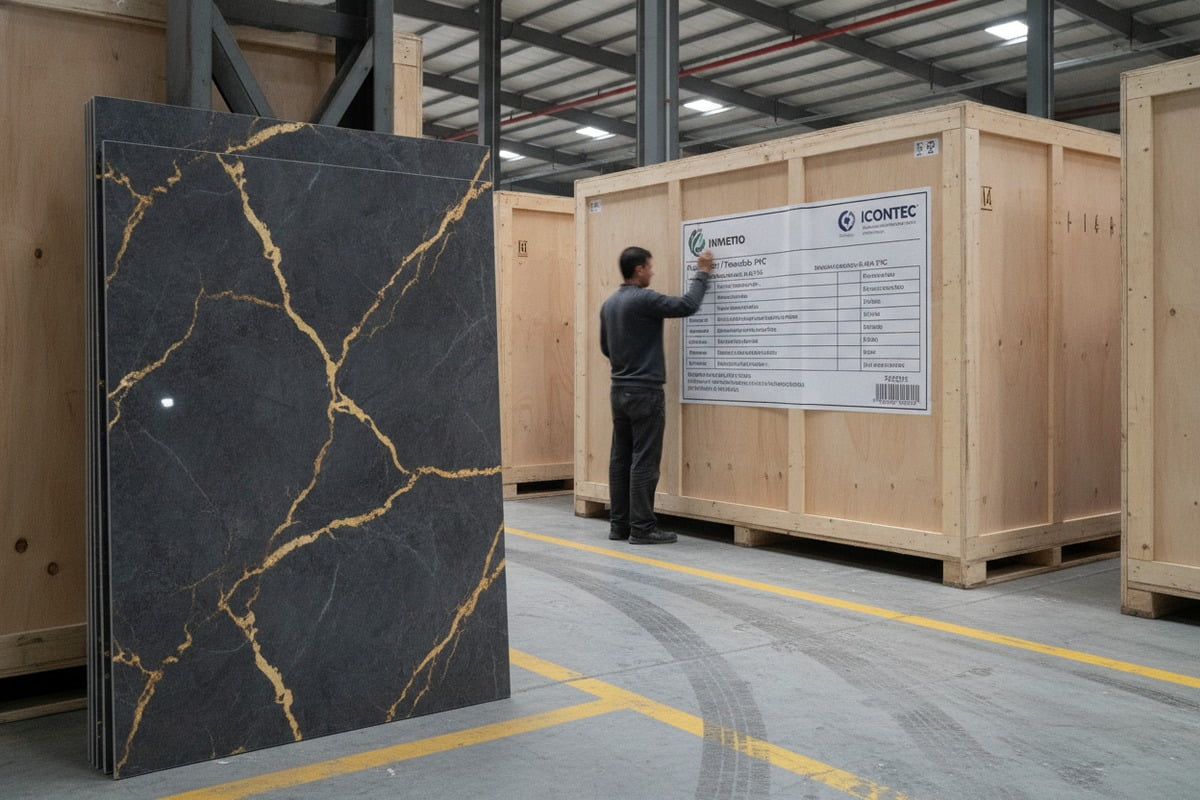
Fire Classification Is the Central Compliance Risk
Fire safety is the number one reason PVC ceiling shipments get questioned at customs or rejected by local building inspectors. The word "fire-retardant" on a supplier's product page is marketing language. It is not a certificate. It does not tell you which fire class the product achieves, which test method was used, or which building types accept it.
In our experience shipping to Colombia and Ecuador, buyers who skip this step face costly problems. One distributor we work with lost a hotel project because his panels had no recognized fire classification for commercial interiors. The panels were fine for a residential bathroom. They were not acceptable for a hotel corridor.
Understanding Fire Test Standards
South American countries often reference or adapt international fire test methods. Here are the two main frameworks you should understand, which align with what I always recommend to our buyers — referencing both European EN standards and American ASTM standards:
| Test Framework | Common Standards | What It Measures | Typical South American Relevance |
|---|---|---|---|
| European EN | EN 13501-1 (Euroclass) | Reaction to fire, smoke production, flaming droplets | Brazil and Argentina sometimes reference EN-based classifications |
| American ASTM | ASTM E84 7 (flame spread), ASTM E662 (smoke density) | Surface burning characteristics, smoke density | Colombia, Ecuador, and other Andean markets may accept ASTM-based reports |
Application-Specific Fire Requirements
This is the part many importers overlook. A PVC ceiling panel might pass a fire test at one classification level, but the local building code might require a higher level for certain spaces. Here is how it works in practice:
- Residential bathrooms and kitchens — Usually the least strict fire requirement. Moisture resistant panels with basic fire retardancy often suffice.
- Commercial offices and retail — Medium fire class. You typically need documented flame spread and smoke data.
- Hotels, hospitals, schools — Higher fire class. Regulators are strict because these are occupied spaces with vulnerable people.
- Escape routes, corridors, stairwells — The highest fire class. Standard PVC may not qualify at all. Industry guidance warns that standard PVC ceiling tiles can be inappropriate for high-risk or escape-route applications unless specifically fire-rated.
Smoke and Toxicity — The Overlooked Factor
Fire is not just about flames. Smoke kills more people than fire does. Some South American building codes now include smoke density and toxicity requirements for interior ceiling finishes. When we prepare documentation for our Zhejiang base production, we always recommend buyers request ASTM E662 or equivalent smoke density testing alongside the flame spread report.
VOC Emissions and Indoor Air Quality
VOC emissions 8 from PVC ceilings are an emerging concern. Low-quality panels can off-gas chemicals that affect indoor air quality. This matters most in schools, healthcare facilities, and office buildings. While not universally mandatory across South America, several markets are moving toward stricter indoor air quality documentation. Requesting a VOC test report from your supplier now is smart planning — even if your current market does not require it yet.
Which specific test reports should I request from my supplier to clear customs in Colombia or Ecuador?
A recent buyer interaction taught me something valuable. A Colombian distributor sent us a list of twelve documents his customs broker required — and half of them were reports we had never been asked for by buyers in other regions. That exchange showed me how specific customs clearance procedures can be from one country to the next.
For Colombia, request fire test reports (ASTM E84 or equivalent), a certificate of origin, a commercial invoice with tariff classification, and product conformity documentation aligned with NTC standards. For Ecuador, you need INEN-compliant quality reports, RUC registration, and prior authorization documents. Both countries require Spanish-language labeling and material composition data.

Colombia: What DIAN and ICONTEC Expect
Colombia's import system runs through DIAN (the tax and customs authority). Your importer needs a RUT registration. Beyond the basic trade documents, PVC ceilings as construction materials may trigger additional technical requirements through ICONTEC, Colombia's national standards body.
Here is the practical document checklist we prepare for our Colombian buyers:
| Document | Purpose | Who Issues It |
|---|---|---|
| Commercial Invoice | Declares value, quantity, description | Exporter (us) |
| Bill of Lading | Proves shipment and transport | Shipping line |
| Packing List | Details contents of each carton/pallet | Exporter |
| Certificate of Origin | Proves manufacturing country for tariff purposes | Chinese Chamber of Commerce or authorized body |
| Fire Test Report (ASTM E84 or EN 13501-1) | Proves fire classification | Accredited third-party lab (SGS, TÜV, Intertek, etc.) |
| Material Composition Certificate | Confirms PVC content and additives | Factory lab or third-party lab |
| VOC Emission Report | Documents off-gassing levels | Accredited testing lab |
| Spanish-Language Product Labels | Meets mandatory labeling requirements | Exporter prepares; importer reviews |
| NTC Conformity Declaration | Aligns product with Colombian technical norms | Importer or authorized conformity body |
Ecuador: What SENAE and INEN Expect
Ecuador's customs authority is SENAE, and the national standards body is INEN. The import process requires RUC registration. For construction materials like PVC ceilings, Ecuador can require prior authorization or import licenses depending on the product classification.
In our experience, Ecuadorian buyers need to check whether their specific PVC ceiling product falls under a regulated INEN standard. If it does, a conformity assessment must be completed before the goods arrive. This often means sending product samples to a local lab or presenting internationally recognized test reports that INEN accepts.
The Tariff Classification Trap
One mistake I have seen repeatedly: buyers use the wrong tariff code (known as NCM in Brazil or the national equivalent elsewhere). PVC ceiling panels can fall under different HS codes 9 depending on whether they are classified as "plastic sheets," "building panels," or "decorative wall/ceiling coverings." The wrong code can trigger higher import duties for South America, delays, or even seizure.
Always confirm the exact HS/tariff code with your customs broker before shipping. Our sales team works with buyers to provide accurate product descriptions that match the intended classification.
Language and Labeling: A Small Detail That Causes Big Delays
Both Colombia and Ecuador require product labeling in Spanish. This includes:
- Country of origin
- Material composition
- Dimensions and weight
- Safety warnings
- Manufacturer or importer identification
I have seen shipments held at port simply because the labels were in English or Chinese only. We now prepare Spanish-language labels and technical data sheets as part of our standard export package for Latin American orders.
How do I verify that a Chinese factory's certifications are valid for my local market?
When we were developing our quality control processes at our Zhejiang base, we realized something that many buyers never think about: a certificate is only as good as the body that issued it and the market that accepts it. A SONCAP certificate helps in Nigeria. It does nothing in Peru.
To verify a Chinese factory's certifications, cross-check the issuing body against your destination country's accepted list, confirm the certificate's validity date and scope, request the original test report (not just the certificate), and ask whether the product has been previously imported and accepted in your specific market.
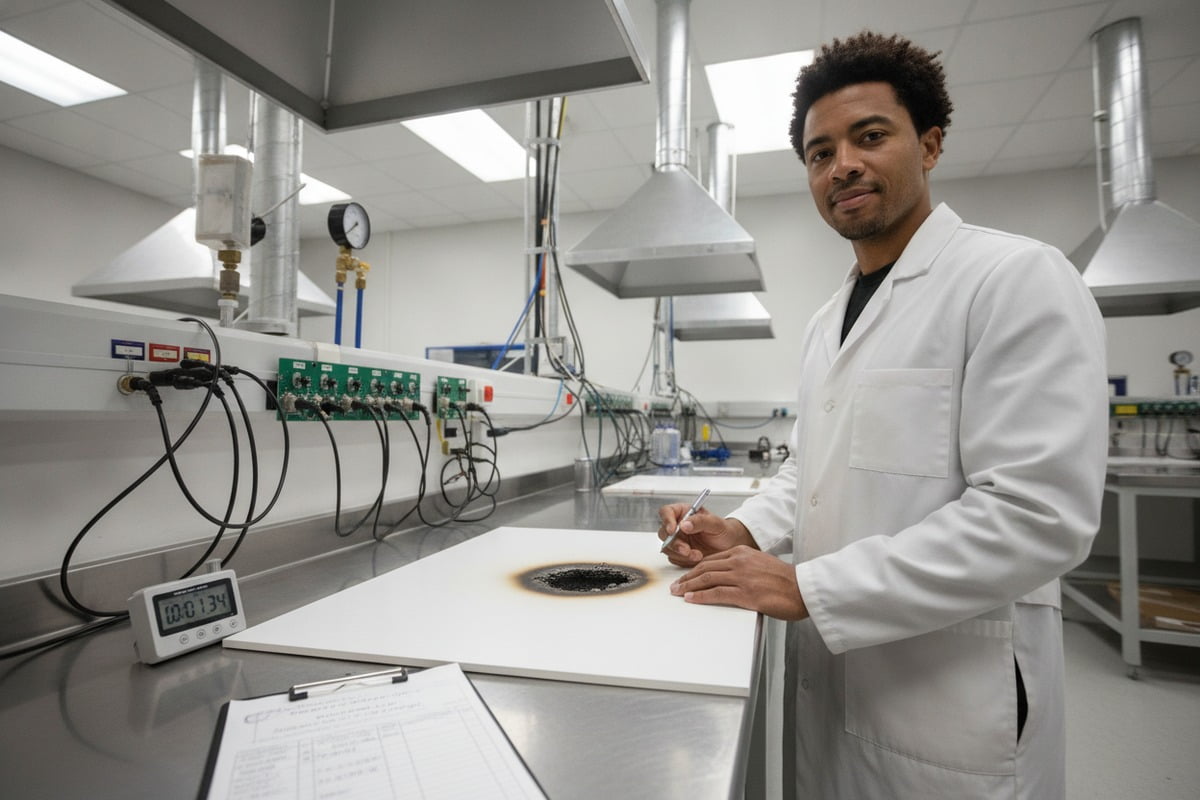
Step-by-Step Verification Process
Here is the process I recommend to every distributor we work with. It takes time, but it prevents expensive mistakes.
- Get the original certificate, not a screenshot. Ask for the PDF directly from the issuing body or with a verifiable certificate number.
- Check the issuing laboratory or certification body. Is it accredited? By whom? Look for ISO 17025 accreditation 10 for testing labs, or ISO 17065 for certification bodies.
- Confirm the certificate scope. Does it cover the exact product you are buying? A fire test on a 8mm panel does not apply to a 6mm panel with a different formulation.
- Verify the validity date. Certificates expire. An ISO 9001 certificate from 2018 may no longer be valid.
- Match it to your local requirement. Does your country's customs or standards body accept this specific certificate type? If not, you may need local re-testing.
Common Certification Mismatches
| What the Supplier Shows | What It Actually Means | Does It Work in South America? |
|---|---|---|
| ISO 9001:2015 | Factory quality management system is audited | Useful for screening, but not a product compliance document |
| SONCAP | Product meets Nigerian import standards | No. Completely irrelevant for South American markets |
| SGS Inspection Report | Third-party inspection of a specific shipment | Helpful for quality control China verification, but not a fire or building code certificate |
| CE Marking | Product meets certain EU directives | Not automatically accepted in South America; may support credibility but does not replace local certification |
| Fire Test Report (ASTM E84) | Product has been tested for flame spread and smoke | Strong — accepted or referenced in several South American markets, but confirm with your local authority |
When to Request Local Re-Testing
Sometimes, a Chinese test report is not enough. In these cases, you may need to send samples to a local accredited lab in the destination country. This happens when:
- The local standards body does not recognize the Chinese lab
- The product is going into a regulated building category (hospitals, schools, government buildings)
- The buyer's client or project specifier requires local test documentation
- The customs authority specifically requests it
Our approach is to provide all available international test reports and then work with the buyer's local customs broker to determine if additional local testing is needed. This saves time and avoids surprises at the port.
Engaging a Local Customs Broker
I cannot stress this enough: a good local customs broker is your best ally. In Colombia, Ecuador, Bolivia, and across the region, customs brokers understand the exact documentation flow. They know which inspectors ask for which reports. They know when prior authorization is needed. For many South American countries, engaging a licensed customs broker is not optional — it is mandatory.
Protecting Yourself from Certificate Fraud
Unfortunately, fake certificates exist. Some factories present certificates from labs that do not exist, or modify the scope of a real certificate to cover products that were never tested. Here is how to protect yourself:
- Verify the lab's existence and accreditation independently
- Contact the issuing body directly with the certificate number
- Request a factory audit or use a third-party quality control service in China
- Ask for references from other South American buyers who have imported the same product
At our operation, we maintain transparent documentation and welcome buyer-initiated verification. This is part of the value-added service we provide — not just panels, but confidence that the paperwork is real and relevant.
Conclusion
Sourcing PVC ceilings from China for South America demands country-specific compliance — not generic certificates. Verify fire ratings, request proper test reports, confirm local acceptance, and work with a trusted supplier and customs broker to avoid costly delays.
Footnotes
1. Defines fire safety classification and its importance in building materials. ↩︎
2. Explains the globally recognized standard for quality management systems. ↩︎
3. Explains the EU’s mandatory conformity marking for products. ↩︎
4. Provides official information on Brazil’s mandatory product certification. ↩︎
5. Official source for Argentine technical standards and certification. ↩︎
6. Official portal for the Andean Community’s integration and regulations. ↩︎
7. Official standard for surface burning characteristics of building materials. ↩︎
8. Provides comprehensive information on VOCs and their impact on indoor air quality. ↩︎
9. Official source for the international Harmonized System of product classification. ↩︎
10. Defines general requirements for the competence of testing and calibration laboratories. ↩︎


0 Comments