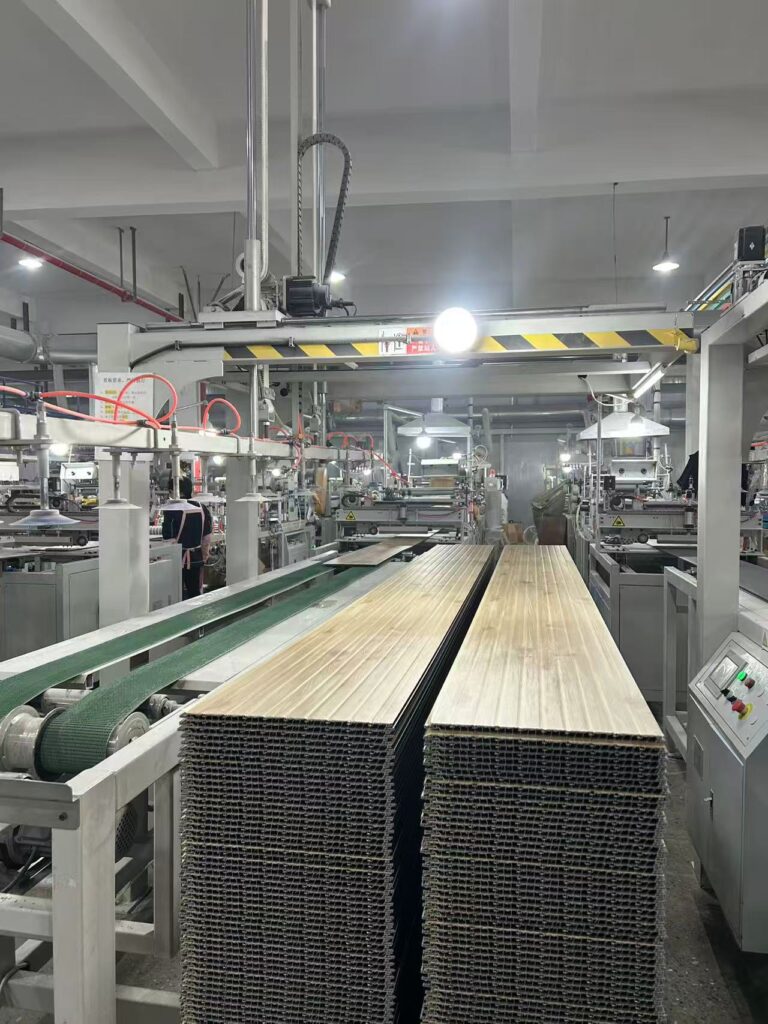
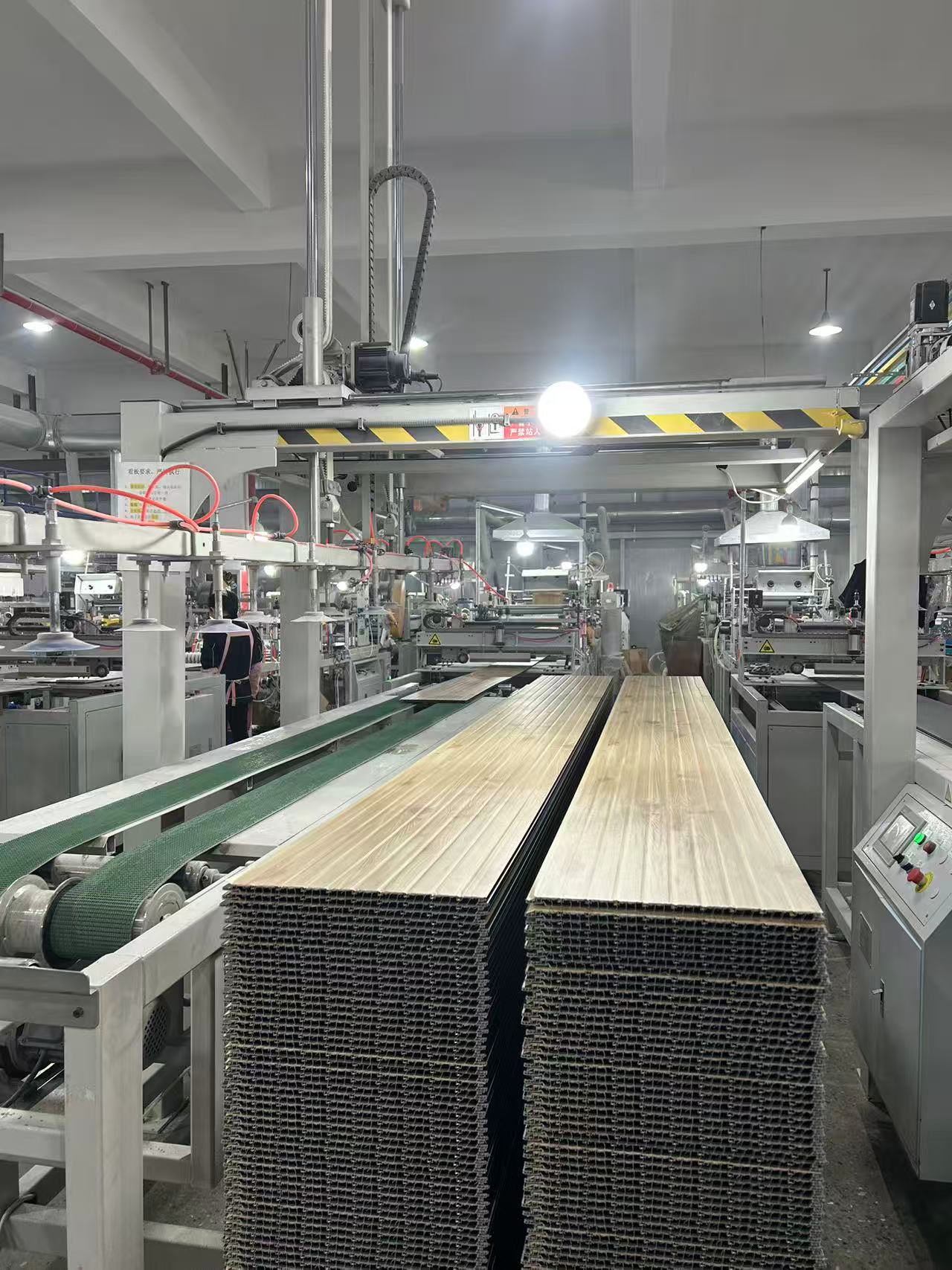
Every week, our sales team receives inquiries from buyers who got burned by suppliers quoting lead times the factory could never actually meet. The panels arrived late, the quality dropped mid-order, and the buyer lost a project deadline. This is the real cost of not evaluating production capacity before placing an order.
To properly evaluate a PVC ceiling supplier, verify actual monthly output per production line, inspect key machinery like extruders and laminating equipment, assess facility size through audits or video tours, and confirm the factory’s ability to handle custom orders based on current line configuration and utilization rate.
In this guide, I will walk you through a practical, step-by-step approach to evaluating any PVC ceiling factory. Whether you are sourcing from China or elsewhere, these methods will help you separate real manufacturers from trading companies and ensure your orders ship on time, every time.
How can I verify if a PVC ceiling factory has the monthly output to meet my bulk orders?
When we schedule production runs for overseas clients, the first question we address is whether our lines have enough headroom to absorb the new order without delaying existing commitments. Many buyers skip this step and regret it later.
Request the factory's output per line per day in square meters, ask how many lines are active, check the current utilization rate, and review recent shipment records. Compare available spare capacity against your order volume to confirm the supplier can deliver within your required lead time.
Understanding Nameplate Capacity vs. Actual Output
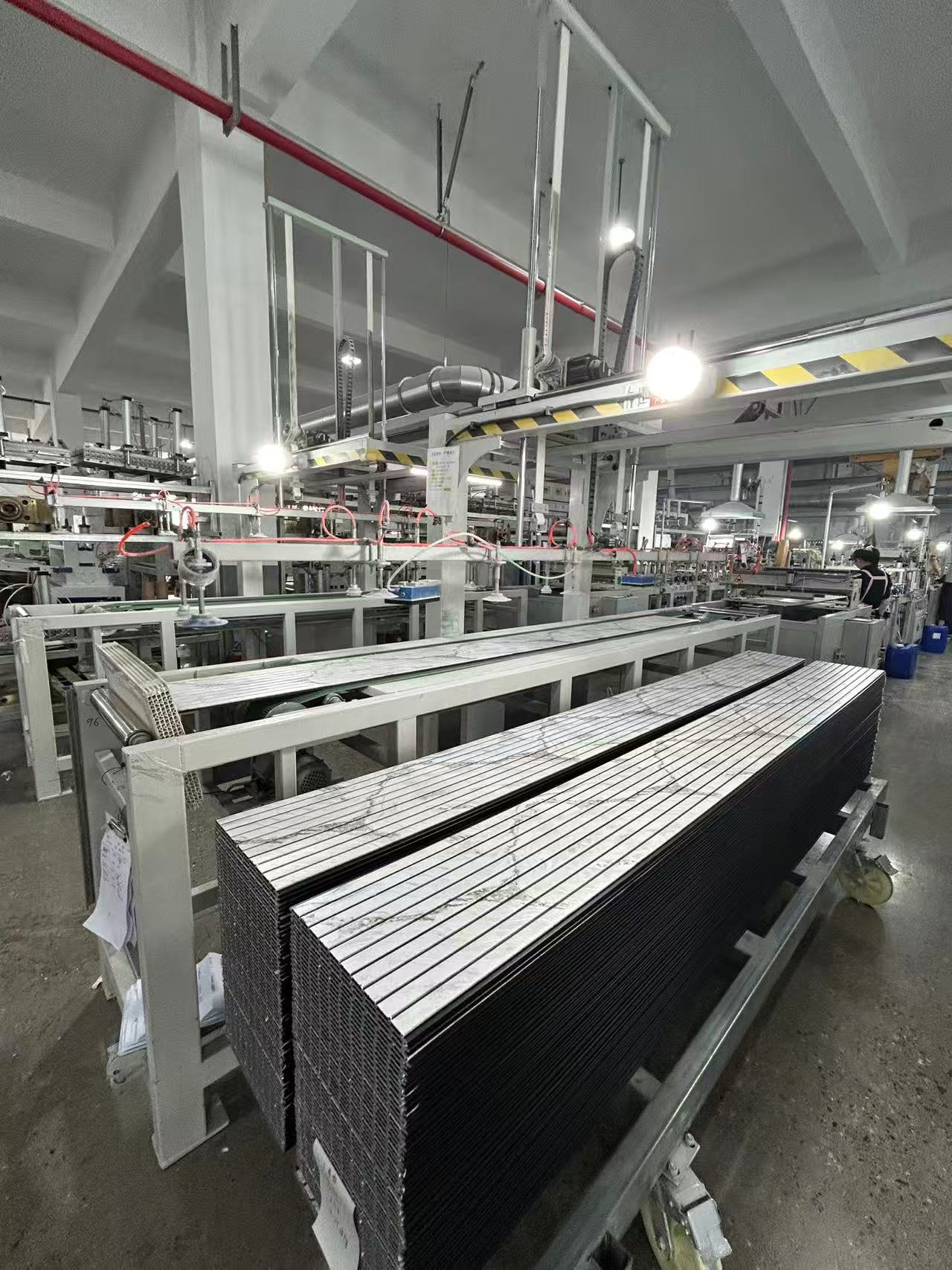
There is a big difference between what a production line can theoretically produce and what it actually delivers each month. A PVC ceiling panel line may be rated at 3,000 m² per 24 hours, but that number assumes zero downtime, no product changeovers, and perfect raw material flow 1. In reality, most lines operate at 60–80% of nameplate capacity 2.
When you ask a supplier about their capacity, push for actual numbers. Ask them: "How many square meters did you ship last month?" This question reveals more than any brochure ever will.
Key Metrics to Request
Here is a simple table showing the data points you should request from any PVC ceiling supplier:
| Metric | What to Ask | Why It Matters |
|---|---|---|
| Output per line per day | "How many m² does each line produce in 24 hours?" | Gives you the baseline production speed |
| Number of active lines | "How many lines are currently running?" | Total capacity = output per line × number of lines |
| Current utilization rate | "What percentage of your capacity is committed?" | Shows if there is room for your order |
| Monthly shipment volume | "How many m² did you ship last month?" | Proves real output, not just theoretical claims |
| Order backlog | "How many weeks of orders are queued?" | Reveals whether lead times are realistic |
| Seasonal peaks | "When is your busiest period?" | Helps you plan order timing to avoid delays |
How to Cross-Check the Numbers
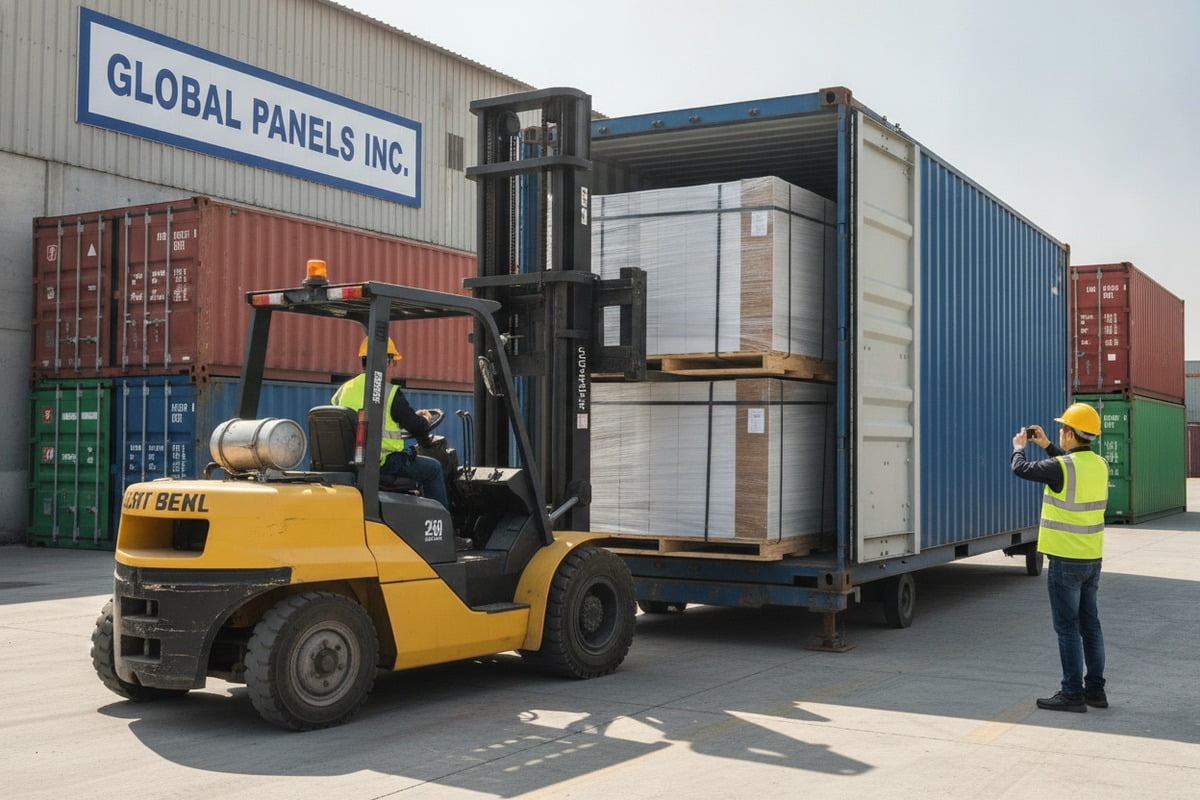
Do not rely on the supplier's word alone. Ask for shipping documents 3, container loading photos, or even customs export records for recent months. In our experience exporting to Southeast Asia and the Middle East, serious buyers often request a copy of our production schedule for the current month. This is a reasonable ask. Any real factory can provide it.
Another effective method is to watch factory production videos. Look at the speed of the lines, the volume of finished goods in the warehouse, and the frequency of container loading. If a factory claims 5,000 m² per day but their warehouse is half-empty and loading happens once a week, the math does not add up.
Typical PVC Ceiling Line Output Ranges
PVC ceiling panel lines vary widely in capacity. Here is a general reference:
| Line Type | Output per 24 Hours | Typical Use Case |
|---|---|---|
| Small single-screw extruder | 800–1,500 m² | Small orders, niche designs |
| Standard twin-screw line | 1,500–3,000 m² | Medium-volume production |
| High-speed automated line | 3,000–5,000 m² | Large bulk orders, standard designs |
If your monthly requirement is 50,000 m², and the factory has two standard lines running at 70% utilization, their real available output is roughly (2 × 2,250 × 30) × 0.30 = about 40,500 m² of spare capacity. That is tight. You need to know these numbers before you commit.
Common MOQ levels in the market sit between 1,000 and 5,000 m², with standard lead times of 12–25 days. Custom printed designs add extra processing time. Always confirm lead times against actual capacity, not marketing promises.
What specific machinery should I look for to ensure my PVC ceilings meet high-quality standards?
Our engineers spend significant time calibrating and maintaining equipment because we know that machine condition directly determines panel quality. A hairline crack in a die or a worn-out roller will show up in every single panel that comes off the line.
Look for modern twin-screw extruders, precision T-dies, efficient vacuum calibration tables, multi-roller cooling systems, accurate cutting machines, and high-quality laminating or hot-stamping equipment. Well-maintained machinery with low breakdown frequency is a stronger quality indicator than factory size alone.
The Core Equipment Chain
PVC ceiling production follows a clear sequence. Each piece of equipment plays a specific role. If any link in the chain is weak, it affects the final product.
Mixing system: This is where PVC resin, calcium carbonate, stabilizers, and other additives are blended. A high-speed hot-cold mixer ensures uniform compound quality. Poor mixing leads to inconsistent panel density and color.
Extruder: The twin-screw extruder 4 melts and pushes the PVC compound through a die. Modern twin-screw models offer better plasticization, lower energy use, and more consistent output than older single-screw machines 5.
Die and calibration table: The die shapes the molten PVC into a flat panel profile. A vacuum calibration table 6 then sets the exact dimensions. Precision here determines thickness uniformity and surface flatness.
Cooling and haul-off: Multi-roller cooling systems bring the panel temperature down evenly. Uneven cooling causes warping. The haul-off unit pulls the panel at a controlled speed to prevent stretching.
Cutting machine: Automatic cutting ensures consistent panel length. Manual cutting introduces human error.
Laminating or hot-stamping unit: This applies the decorative surface film or printed design. The quality of this step determines the final appearance—wood grain realism, color consistency, and adhesion strength.
Equipment Red Flags
| Warning Sign | What It Means | Risk to Your Order |
|---|---|---|
| Visible rust or oil leaks on extruder | Poor maintenance culture | Frequent breakdowns, delayed shipments |
| Manual cutting instead of automatic | Low automation level | Inconsistent panel lengths, higher defect rate |
| Old single-screw extruder | Outdated technology | Uneven plasticization, surface defects |
| No laminating line on-site | Outsourced finishing | Less quality control, longer lead times |
| No thickness gauge or inspection tools | Weak quality control | Panels may not meet specification |
Automation Matters More Than You Think
A highly automated line reduces human error and increases consistency. When we upgraded our laminating section to a fully automated hot-stamping system, our surface defect rate dropped by over 40%. Buyers should ask whether the factory uses inline quality sensors, automatic temperature controls, and programmable logic controllers (PLCs) 7 on their lines.
Energy efficiency is also worth checking. Newer servo-driven extruders use 30–50% less electricity than older hydraulic models. This does not just reduce the supplier's costs—it tells you the factory is investing in its future, which signals long-term reliability.
Ask About Backup Plans
Even well-maintained machines break down. Ask the supplier: "What happens if your main extruder goes down during my order?" A factory with a backup extruder or spare critical parts can recover quickly. A factory without backup capacity may delay your shipment by weeks.
How do I assess the physical scale of a supplier's facility to confirm they are a real manufacturer?
I have seen trading companies rent a small workshop, place one old machine inside, and present it as "our factory" on a video call. It happens more often than buyers expect, especially in online sourcing. Knowing how to assess physical scale protects you from this trap.
Assess a supplier's real manufacturing scale by requesting a full factory video tour showing raw material storage, production lines, quality control stations, finished goods warehouse, and loading areas. Cross-check with third-party audit reports, satellite images, and business registration documents that confirm factory ownership and address.

What a Real Factory Looks Like
A genuine PVC ceiling manufacturer has several distinct areas that a trading company cannot fake easily. These include:
- Raw material warehouse: You should see pallets of PVC resin bags, calcium carbonate, stabilizers, and rolls of lamination film. Raw materials typically account for 70–80% of operating expenses in PVC panel manufacturing, so a real factory stores significant quantities.
- Mixing area: Large hot-cold mixers and storage silos for blended compound.
- Extrusion hall: Multiple production lines running simultaneously, with visible extruders, dies, calibration tables, cooling units, and cutting machines.
- Lamination or printing area: Separate section for applying decorative surfaces.
- Quality control room: Testing equipment for thickness measurement, surface adhesion, color matching, and impact resistance.
- Finished goods warehouse: Stacked, packaged panels ready for shipment.
- Loading dock: Space for containers and evidence of regular container loading.
Verification Methods
You do not need to fly to China to verify a factory. Here are practical methods:
Video call tour: Ask the supplier to walk you through the entire facility on a live video call. Pay attention to continuity. A real factory tour flows logically from raw materials to finished goods. A staged tour will have gaps and awkward transitions.
Third-party audit: Companies like SGS, Bureau Veritas, and TÜV offer factory audit services in China. They verify the factory address, equipment list, worker count, production capacity, and quality systems. The cost is typically $300–$800, which is minimal compared to the risk of a bad supplier.
Satellite imagery: Use Google Maps or Baidu Maps to check the factory address. A real manufacturing facility has a large footprint with industrial buildings and loading areas visible from satellite view.
Business registration check: In China, factory business licenses are public record. You can verify the company name, registered capital, establishment date, and business scope through official databases.
Shipment history: Ask for photos or records of recent container loadings. Look for branded packaging with the factory name, container seal numbers, and bill of lading references.
Scale Indicators to Watch
When reviewing a facility, here are specific things that indicate genuine scale:
A factory with 3–5 active extrusion lines, 50+ workers on the production floor, and a warehouse with thousands of square meters of finished panels is clearly a real manufacturer. A facility with one idle machine, five employees, and a near-empty warehouse is likely a front.
Also check the factory's surroundings. Is it located in an industrial zone 8? Are there other factories nearby? Legitimate manufacturers are typically situated in designated industrial parks with proper infrastructure for power, water, and waste handling.
Can the factory handle my custom design requirements based on their current production line setup?
When we receive a request for a custom wood-grain pattern or a non-standard panel width, the first thing our production team checks is whether our current die inventory and laminating setup can handle it—or whether new tooling is needed. This internal check determines both feasibility and lead time.
A factory can handle your custom PVC ceiling designs if it has flexible die tooling for different panel dimensions, a laminating or digital printing line for custom surface patterns, and experienced operators who have completed similar custom projects before. Always request samples and ask about tooling lead times before committing to a bulk order.
What "Custom" Actually Means in PVC Ceilings
Customization in PVC ceiling panels can range from simple to complex. Understanding the levels helps you ask the right questions.
| Customization Level | Examples | What the Factory Needs |
|---|---|---|
| Basic | Custom packaging, private labeling | Printing capability, packaging flexibility |
| Moderate | Specific colors, wood grain patterns, surface textures | Laminating line with diverse film inventory or hot-stamping capability |
| Advanced | Non-standard panel width or thickness, unique tongue-and-groove profiles | Custom extrusion dies, calibration tooling changes |
| Complex | Embossed 3D textures, digital-printed designs, special material formulations | Advanced finishing equipment, R&D capability, formula adjustment |
Questions to Ask About Custom Capability
Before placing a custom order, get clear answers to these questions:
- Do you have the die for my panel dimensions? If not, how long does it take to make a new die, and what is the cost?
- Can you match this color or pattern? Ask the factory to produce a physical sample before you commit. Color matching on screen is unreliable.
- What is the minimum order quantity for custom designs? Custom runs usually require higher MOQs because of setup time and material waste. Expect 3,000–5,000 m² minimums for custom printed surfaces.
- How long does sampling take? A capable factory can typically produce custom samples in 5–10 days. If they say 30 days or more, their line may not be set up for flexibility.
- Have you done similar custom projects before? Ask for photos or references from past custom orders. Experience matters—a factory that has only produced standard white panels may struggle with complex wood-grain lamination.
The Tongue-and-Groove Detail
One often-overlooked aspect of customization is the interlocking edge profile. PVC ceiling panels use tongue-and-groove systems 10 for seamless installation. If your design requires a different joint style—such as a V-groove, flat-lock, or concealed-fix profile—the factory needs a matching die. Changing the edge profile is not a minor adjustment. It requires new tooling and recalibration.
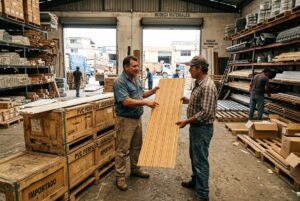
When reviewing product samples, like the wood-grain and solid white panels with interlocking edges commonly found in this market, pay close attention to how tightly the joints fit. A loose joint means the die is worn or the calibration is off. A tight, clean joint indicates precision tooling and proper machine setup.
Scalability of Custom Orders
A critical question many buyers forget to ask is: "If my first custom order goes well and I want to double the volume next time, can you handle it?" A factory that barely manages your initial order will struggle when you scale up. Look for suppliers with multiple lines, spare die capacity, and a history of growing with their clients.
Research and development investment also signals custom capability. A factory that actively develops new surface finishes, improved formulations, or innovative panel profiles is more likely to execute your custom requirements accurately. Ask whether they have a dedicated R&D team or sample room.
Pricing is also affected. Standard PVC ceiling panels in the market typically fall in the US$1.4–2.6 per m² range, depending on thickness and finish. Custom designs—especially those requiring new dies or unique surface treatments—will sit at the higher end or above this range. Factor tooling costs and longer lead times into your budget from the start.
Conclusion
Evaluating a PVC ceiling supplier goes far beyond checking factory size. Verify real output, inspect equipment condition, confirm facility authenticity, and test custom capability before you commit to any order.
Footnotes
- Reference 2. ↩︎
- Defines the theoretical maximum output of a facility. ↩︎
- Reference 3. ↩︎
- Explains the working principles and applications of twin-screw extruders. ↩︎
- Reference 4. ↩︎
- Describes the design and function of vacuum calibration tables in plastic profile extrusion. ↩︎
- Explains what PLCs are and their role in industrial automation and manufacturing processes. ↩︎
- Defines industrial zoning and its purpose in urban planning. ↩︎
- Describes factory audit services provided by an independent third party. ↩︎
- Reference 10. ↩︎


0 Comments